A Patagonian Leviathan's Song
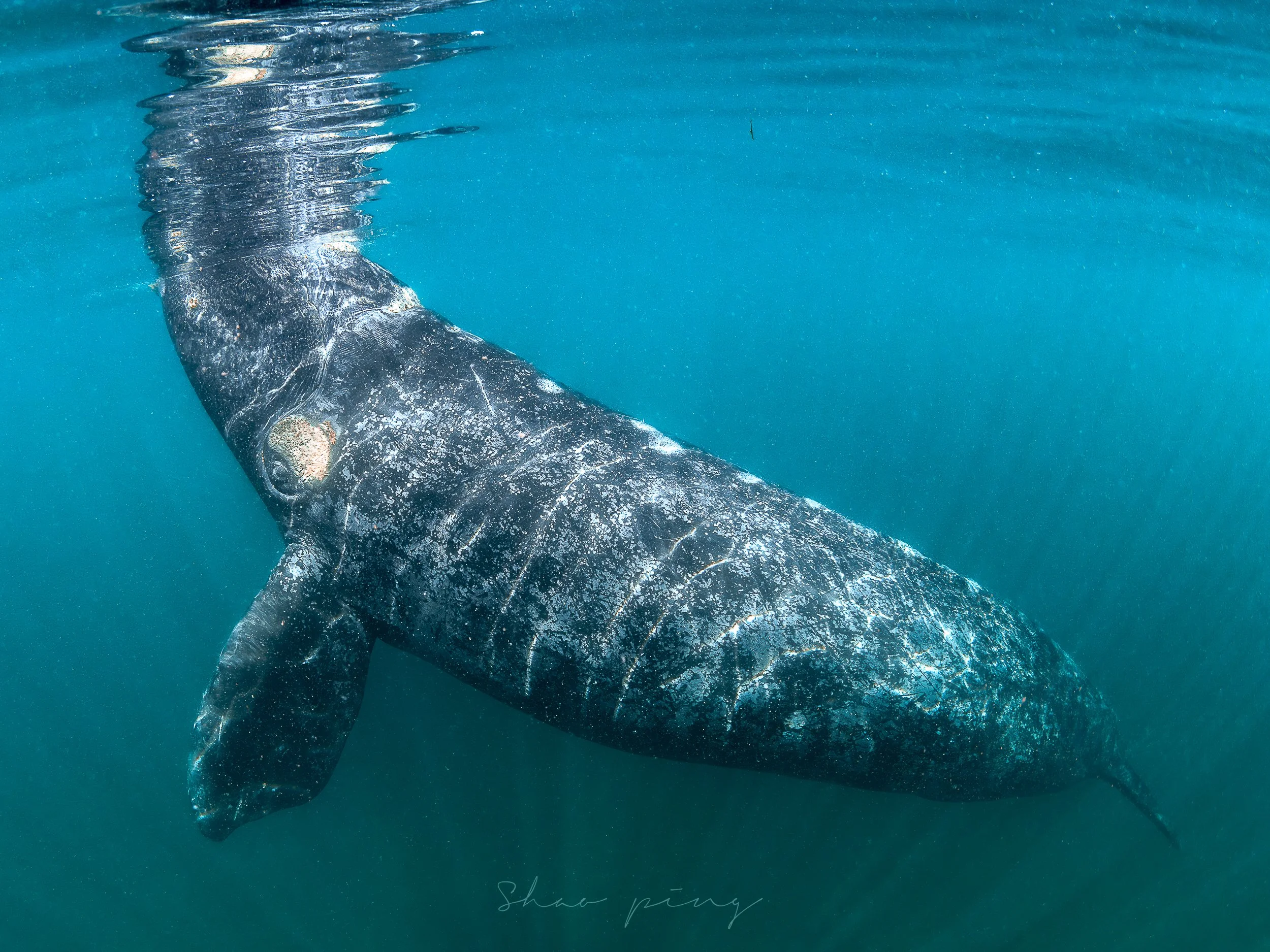
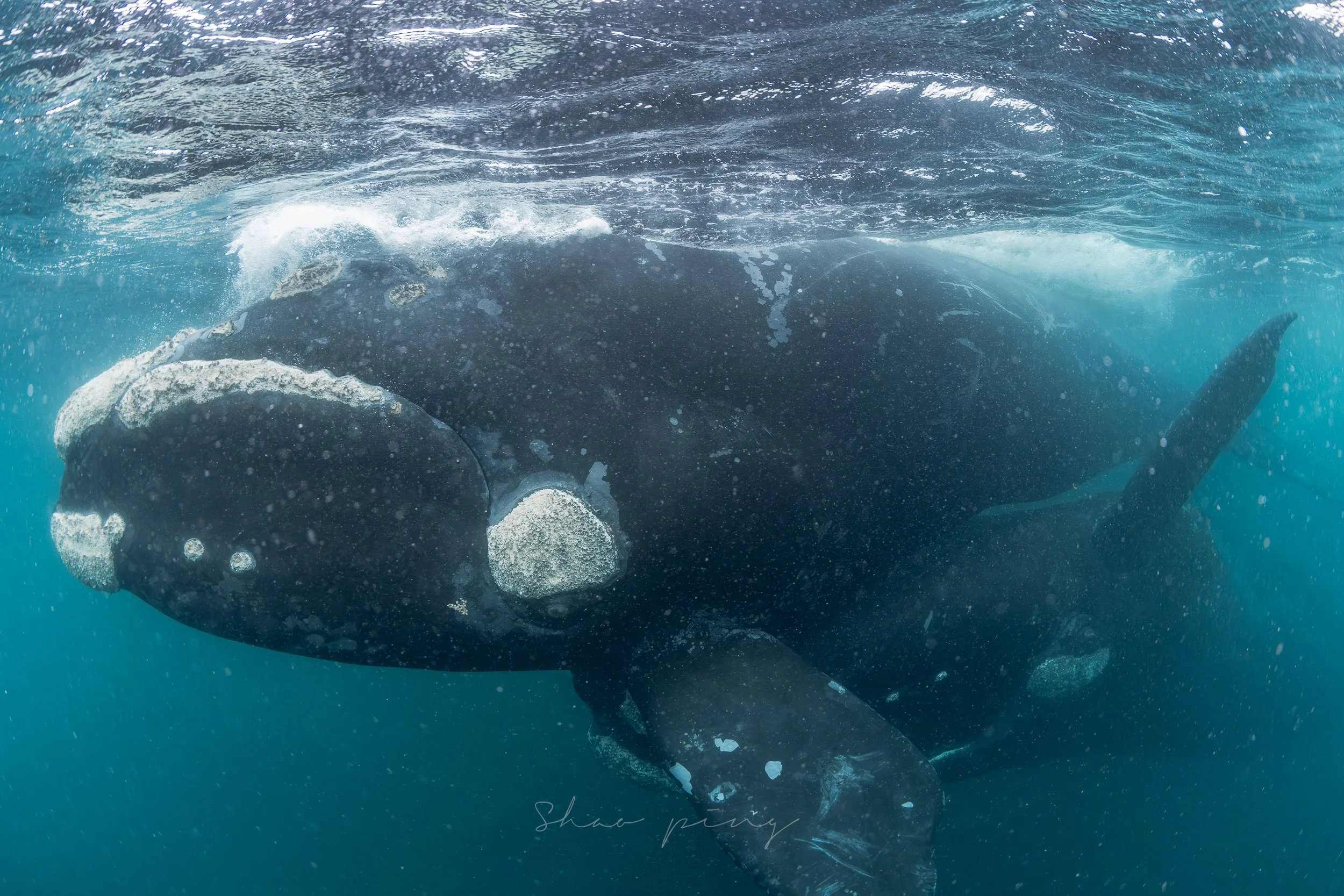
Southern Right Whale staring at me.
Firstly, I would like to express my gratitudes to the Chubut government of Argentina for accommodating our specific requests to observe and document the Southern Right whales in their natural habitat. These whales represent some of the most notable and valued marine species native to Patagonia. All photographs presented here were taken personally under special permit in full compliance with strict guidelines and protocols established by both authorities and tour operator.
The Southern Right Whale (Eubalaena australis) is a large baleen whale, one of three species classified under the genus Eubalaena. Their story is one of remarkable resilience, tracing a journey from the brink of extinction to a slow, cautiously hopeful recovery. Throughout this history, humans have played a major and often decisive role, both driving their decline through intensive hunting and now supporting their comeback through conservation efforts and protected habitats.
Southern Right Whale were given the name ‘right whales’ because they were considered the “right” whales to hunt. Their slow, graceful movements and social behavior made them easy targets, especially as they tend to remain close to shorelines during the breeding season. As a result, they were hunted extensively for their valuable oil and meat, pushing them to the brink of extinction. Today, as a fully protected species, Southern Right Whale numbers have gradually increased. Conservationists we spoke with described the thrill of seeing these majestic animals return year after year—a testament to decades of dedicated protection efforts. Recent surveys reported an estimated population of more than 2,110 individuals in the area we visited. Although this number is still far below pre-whaling estimates—which are believed to have been in the tens of thousands—it represents a significant improvement from the few hundred individuals remaining at the lowest point of their decline. These encouraging signs offer hope that, with continued vigilance, the Southern Right Whale’s remarkable recovery will continue. The government of Chubut has done a remarkable job not only in protecting these magnificent creatures but also in providing responsible opportunities for photographers like us to document and share their story. We were also fortunate to have a knowledgeable and responsible guide and operator, who ensured that our experience was both safe and respectful for the whales and the environment.
During our visit, we were fortunate to spot several whales lingering near the shoreline, their distinctive V-shaped blows visible against the morning light.
Located in northern Patagonia, Peninsula Valdés is one of Argentina’s most significant protected areas, spanning approximately 360,000 hectares. The peninsula is defined by two large gulfs—San José Gulf to the north and Nuevo Gulf to the south—connected to the mainland by a narrow isthmus. The area is sparsely inhabited, with minimal infrastructure and almost no industrial activity. The landscape is predominantly dry and barren, featuring Patagonian desert steppe vegetation with low shrubs and grasses, interspersed with salt flats, lagoons, and shifting sand dunes. In striking contrast, the coastline presents a rugged and dramatic environment of cliffs, rocky shores, and sandy beaches, supporting rich marine ecosystems fueled by the convergence of ocean currents. This unique combination of desert steppe and rugged shoreline provides a variety of habitats for both terrestrial wildlife and abundant marine species.
The weather forecast for Puerto Madryn proved quite unpredictable, with sudden changes in wind occurring rapidly and unexpectedly. Despite these ever-changing conditions, we were ultimately fortunate to enjoy fairly good weather throughout our trip. The water itself, however, was not at its clearest or most pristine; it appeared somewhat greenish, containing numerous suspended particles. At times, vertical visibility underwater was surprisingly good, yet horizontal visibility remained limited.
Sharing the water with such large animals is a truly remarkable experience—one whose uniqueness often depends on how the animal responds to your presence. We preferred to swim slowly, calmly, and quietly, often waiting and observing; being in such close proximity to these unusually shaped giants was truly life-changing. Over the course of five days spent in the water with them, our encounters steadily improved as we gained confidence. Some whales may choose to avoid you entirely, while others seem to enjoy your presence. They possess an extraordinary ability to sense where you are and adjust their movements accordingly—a reassuring trait, given the potential harm their enormous flukes and tails could cause. We took every precaution to prevent any physical contact. Yet, even when a calf approached so closely that we could almost touch it, it displayed an instinctive awareness of us, turning away just in time. However, we did encounter
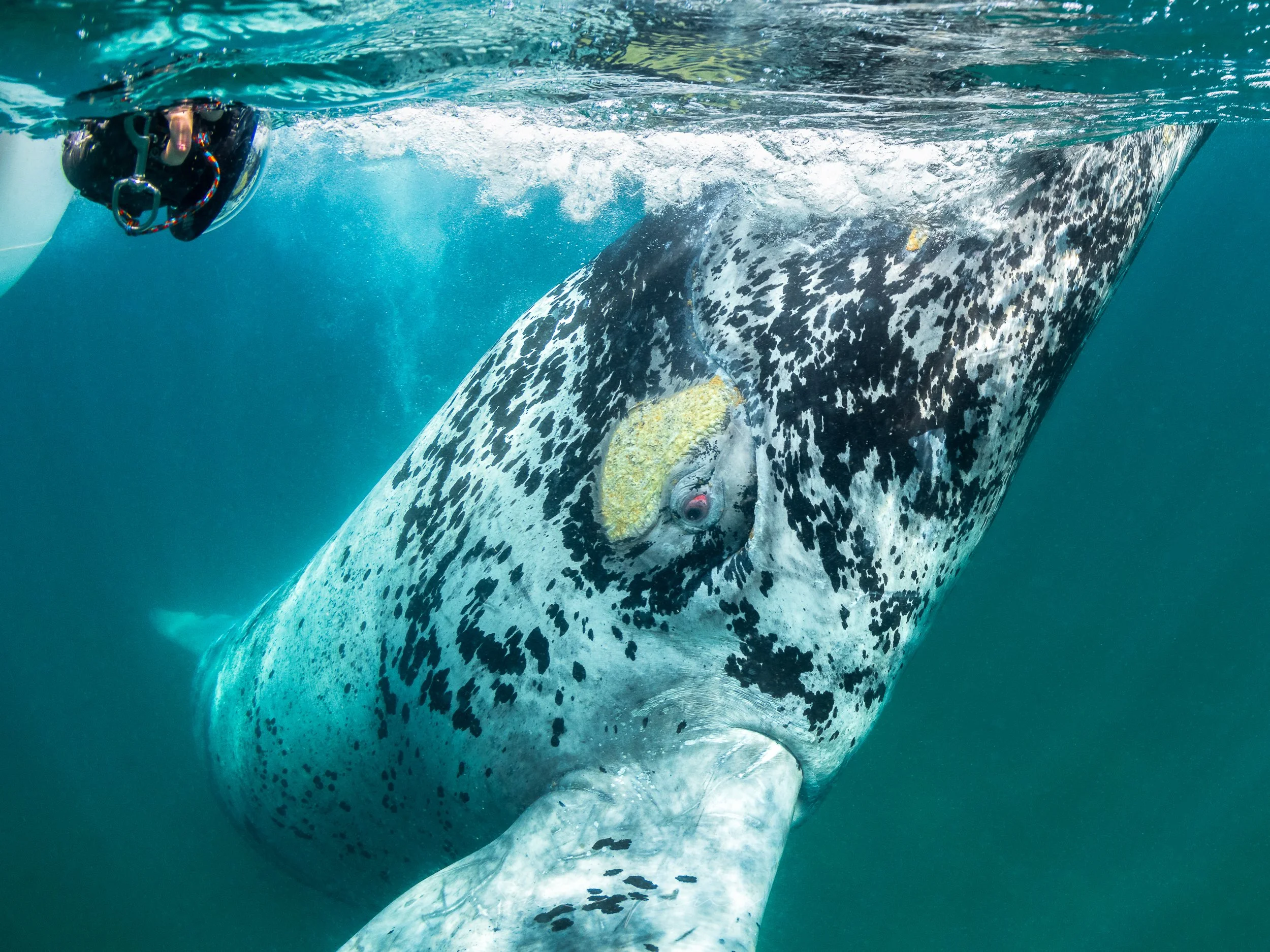
A very curious white southern right whale came close to our boat. They sometimes thought our boat to be one of them.
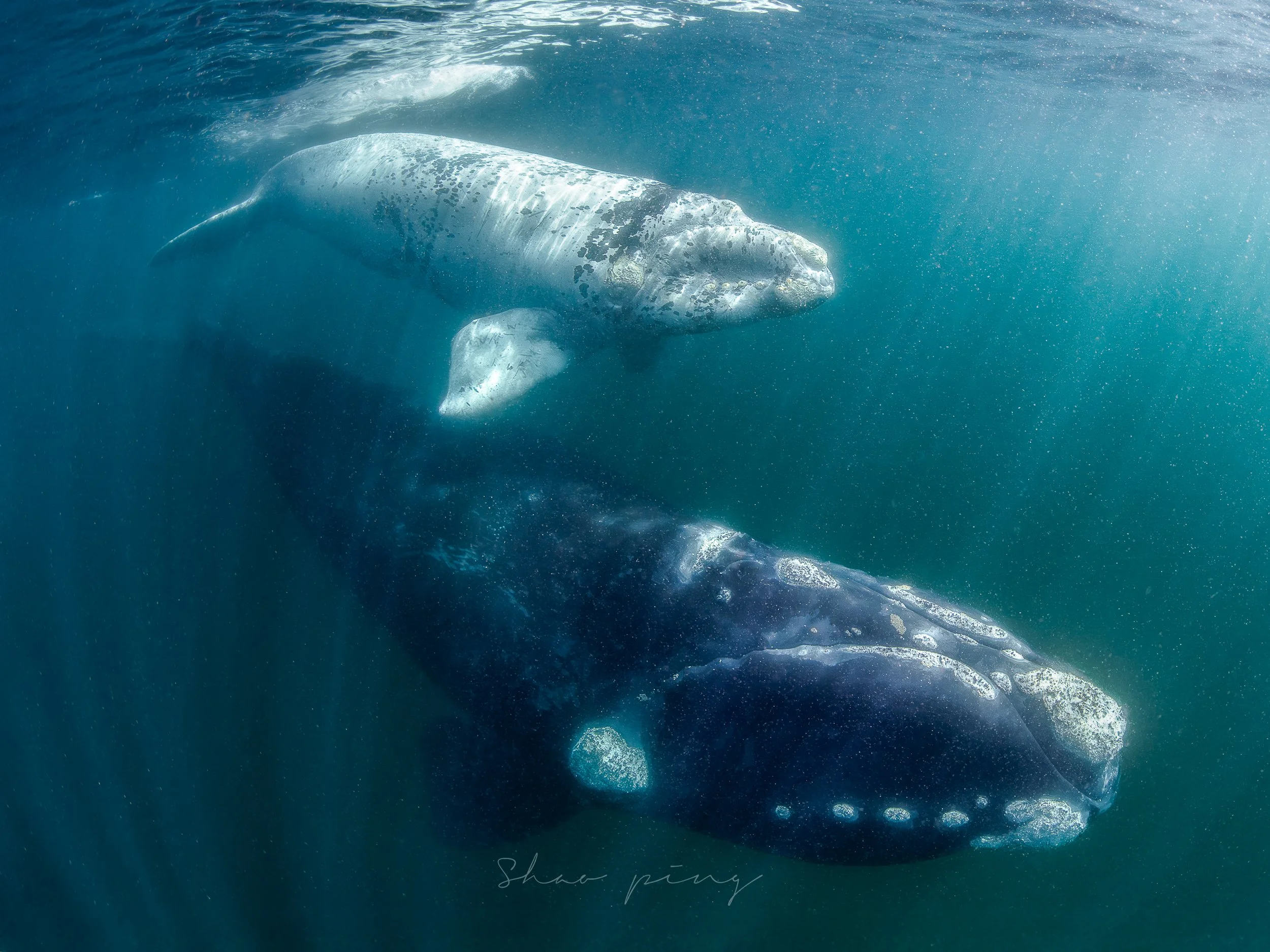
Mother and calve, black and white
First day at sea, we were warmly welcomed by the gentle light of the sun rising slowly over the horizon, casting a golden glow across the calm, serene sea. Captain xxx soon spotted a distinctive white shadow far off, which turned out to be one of the rare white calves! They are white at birth due to genetic condition called grey morphism, different to albinos, as their coloration changes with age, gradually becoming a slightly darker grey that is known as brindled. Only about 3% of calves were born in white, and report showed that they are mostly male.
Their striking white appearance results from a lack of pigmentation in the skin. If there were no pigmentation at all, they would be true albinos, but these are not completely white; they still have a distinctive black collar just behind the head, along with irregular black spots mainly scattered across their backs. As they grow older, their color shifts but never reaches the deep black pigmentation seen in their peers.
One particular white calf caught our attention—it was notably curious and playful, circling around us for quite some time, clearly showing a keen interest in our presence. Everyone was like “wow, wow, wow”, while I was waiting for my turn to be in the water, jealously. The white calve swam to our boat, curiously checking what is this big thing. We even took the opportunity to dunk our camera as it went pass us. At the end, we all had a chance to take a close look at it. It was a good start.
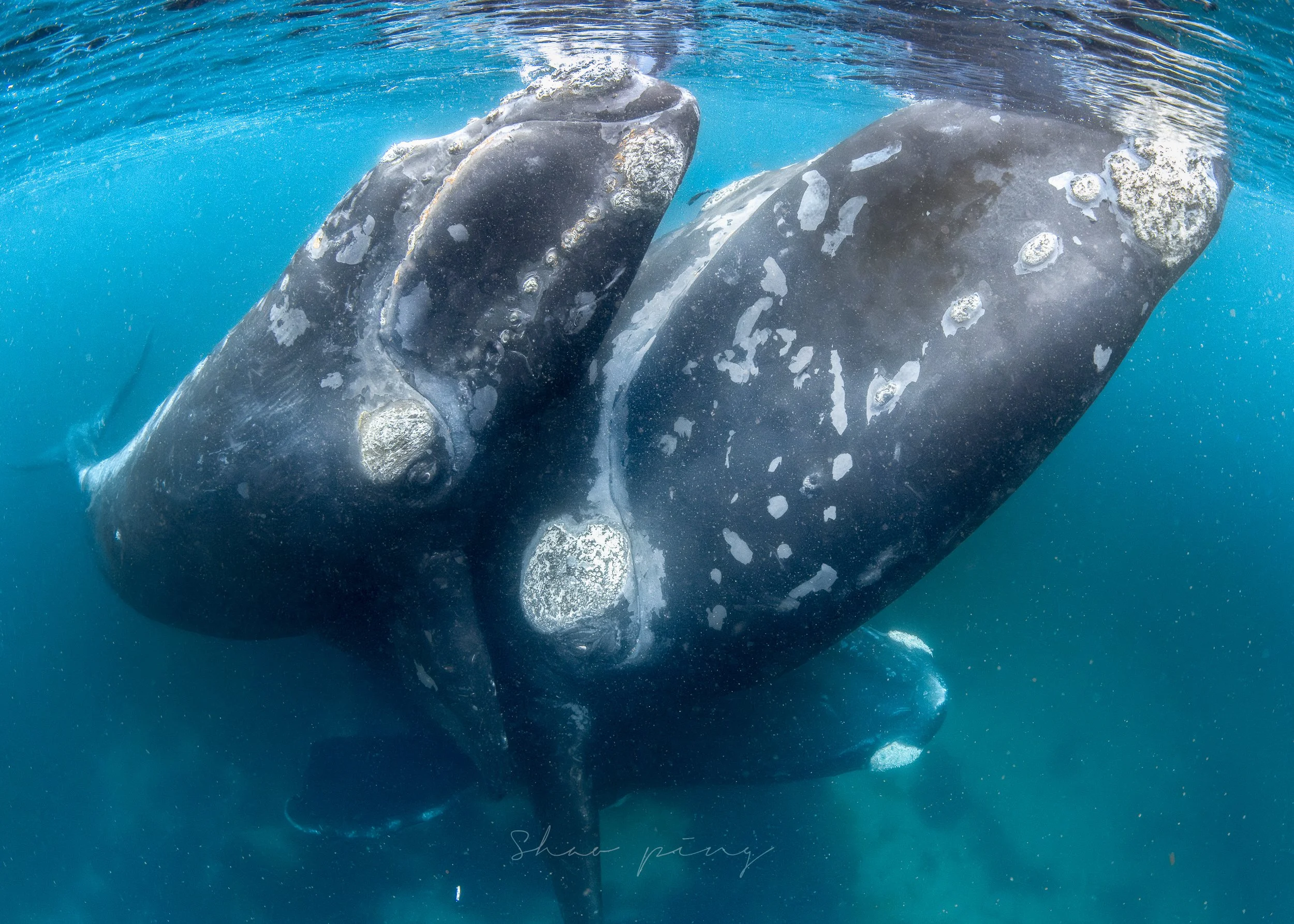
Special theme - threesome. Underneath one male was trying to get in to the female (middle).
Usually female is above the other and a male on the bottom is inverted, belly-to-belly.
A large gathering could be seen from a long distance, fountains of thick and heavy mist rising from the water. The closer we got there, the louder was those powerful explosive blows —loud, deep, and unrelenting—resembling the roars of a dinosaur. It felt like a fierce fight, with a few chasing one another, some suddenly turning around, causing big waves that rocked our boats violently. The intensity was overwhelming; the ocean churned wildly, and you could feel each of their breath and sense their powerful movement. They were in the midst of mating! I was absolutely thrilled to witness such an extraordinary moment.
Donnelly (1967) provided the first detailed account of mating behavior in southern right whales based on observations made during a month-long period spanning late August and September 1965 in Algoa Bay, South Africa. He introduced the term "courting pairs of whales" to describe a unique social grouping consisting of two whales rolling and splashing together at the surface, a behavior easily visible from a considerable distance due to their flukes and flippers waving above the water. These pairs were engaged in what appeared to be mating behavior, characterized by a surprising combination of tenderness and grace. Donnelly divided the courtship interactions into distinct phases: pre-copulatory behavior, in which the female remained horizontal while the male gently caressed her; copulatory approach, during which the female maintained a horizontal position with her dorsum facing upward, while the male rolled underneath and positioned himself belly-to-belly; and post-coitus behavior, when the female returned to a dorsal-side-up posture, which was interpreted as her normal responsive behavior after mating. Despite the inherent difficulty of detecting these sequences, the behaviors were meticulously described, highlighting that the female would lie horizontal at the surface with her head and forequarters exposed, while the male actively dove, circled, and caressed her continuously for at least four hours, often resting his chin gently on her hindquarters throughout the interaction.
Right whales have a polygynandrous mating strategy where females and males mate with multiple partners within a breeding season. It is hypothesized that this promotes sperm competition among males and likely explains the large testis-to-body-size ratio in Eubalaenids. Surface active groups (SAGs) characterize mating behavior in North Atlantic and Southern Right Whales, where two or more animals are at the surface with frequent physical contact. Observations of copulation in SAGs have led to the hypothesis that conception is the primary function, with females practicing a mating strategy where the chance of conception with the largest and likely healthiest male would be maximized. Right whales produce their entire acoustic repertoire of known calls while in SAGs and sounds are thought to serve a social communication function. On southern right whale calving grounds, mother-calf pairs use relatively shallow waters along the coastline, and SAGs tend to occur farther from shore: calving and mating occur in winter in largely the same habitat areas. Analyses of seasonal timing and group composition of individually identified animals within SAGs suggest that they may serve multiple other roles, since conceptive and non-conceptive groups have been revealed. SAGs often include pregnant females, juveniles, and occasionally calves. Some groups consist of exclusively same sex individuals. It has been hypothesized that, in addition to conception, SAGs may also provide opportunities for right whales to socialize, play, learn, practice mating, and identify potential future mates.
or those courting groups that I have seen, if we were in shallow water (which is where we would often work to see mothers and calves) the courting group tended to stir up the sand within a few minutes of starting their activities and the risk of being run over by twisting and turning whales in near-zero visibility was high. I once found myself underneath a pair of whales who cared little about me with about 5′ of space between the bottom whale and the sand, and from that time have been even more cautious than usual around courting groups. In deeper water the visibility is less of an issue, but still the whales move so erratically that knowing where to place oneself in anticipation of a mating photograph is more of a throw of the dice than anything else.
References
BATimes Newspaper. (2025, August 26). Census finds record number of southern right whales off coast. Buenos Aires Times. https://www.batimes.com.ar/news/argentina/a-census-on-chubut-coasts-found-record-number-of-right-whales-in-2025.phtml
Colla, P. (n.d.). Courtship and mating groups among Southern right whales – Natural History Photography blog. https://www.oceanlight.com/log/courtship-and-mating-groups-among-southern-right-whales.html
Whales in Peninsula Valdes: Season and useful information. (n.d.). Peninsula Valdes. https://peninsulavaldes.com/wildlife/whales
Wikipedia contributors. (2025, November 6). Southern right whale. Wikipedia. https://en.wikipedia.org/wiki/Southern_right_whale
Würsig, B., & Orbach, D. N. (Eds.). (2023). Sex in Cetaceans (By Texas A&M University at Galveston & Texas A&M University- Corpus Christi). https://doi.org/10.1007/978-3-031-35651-3